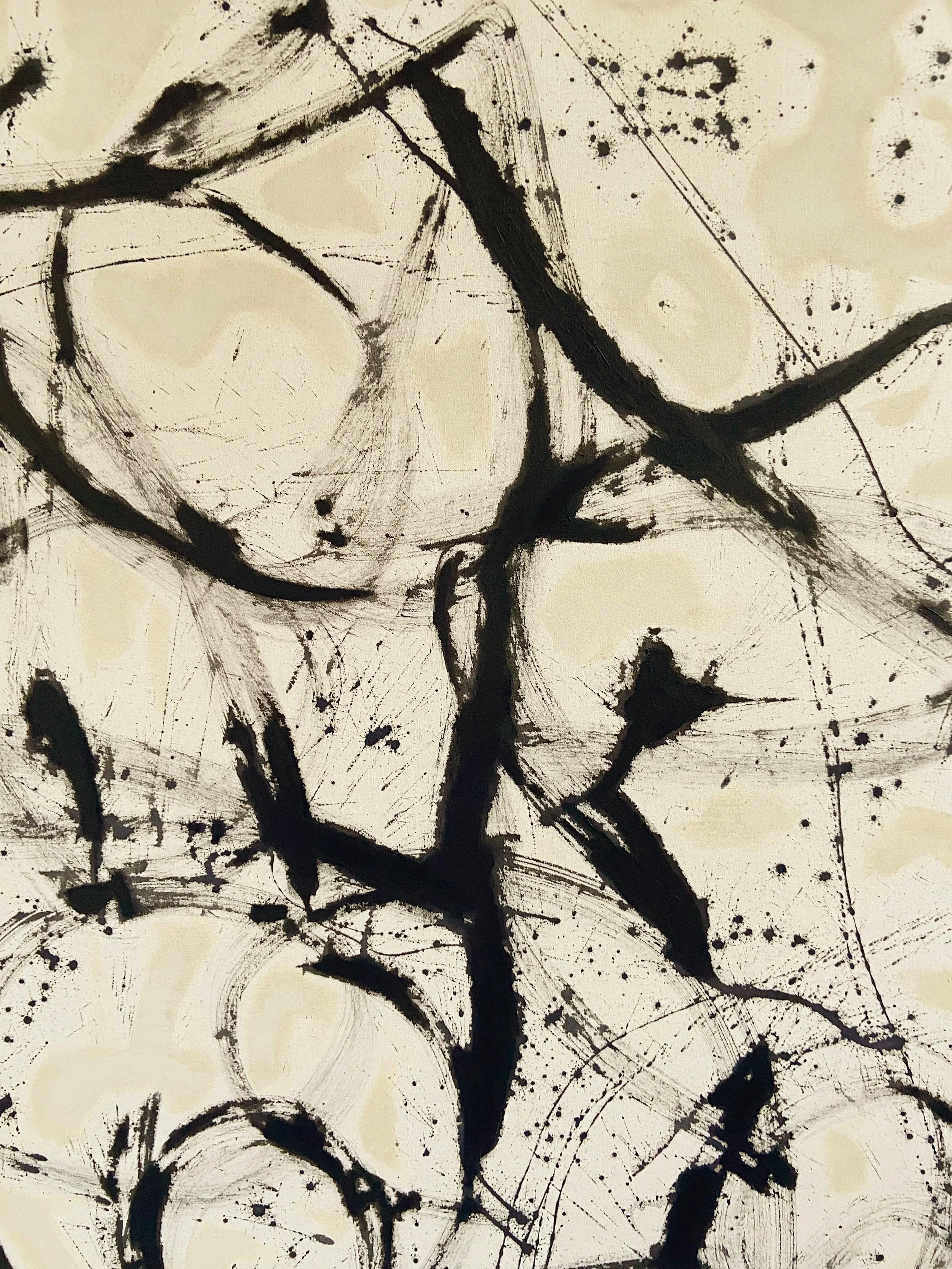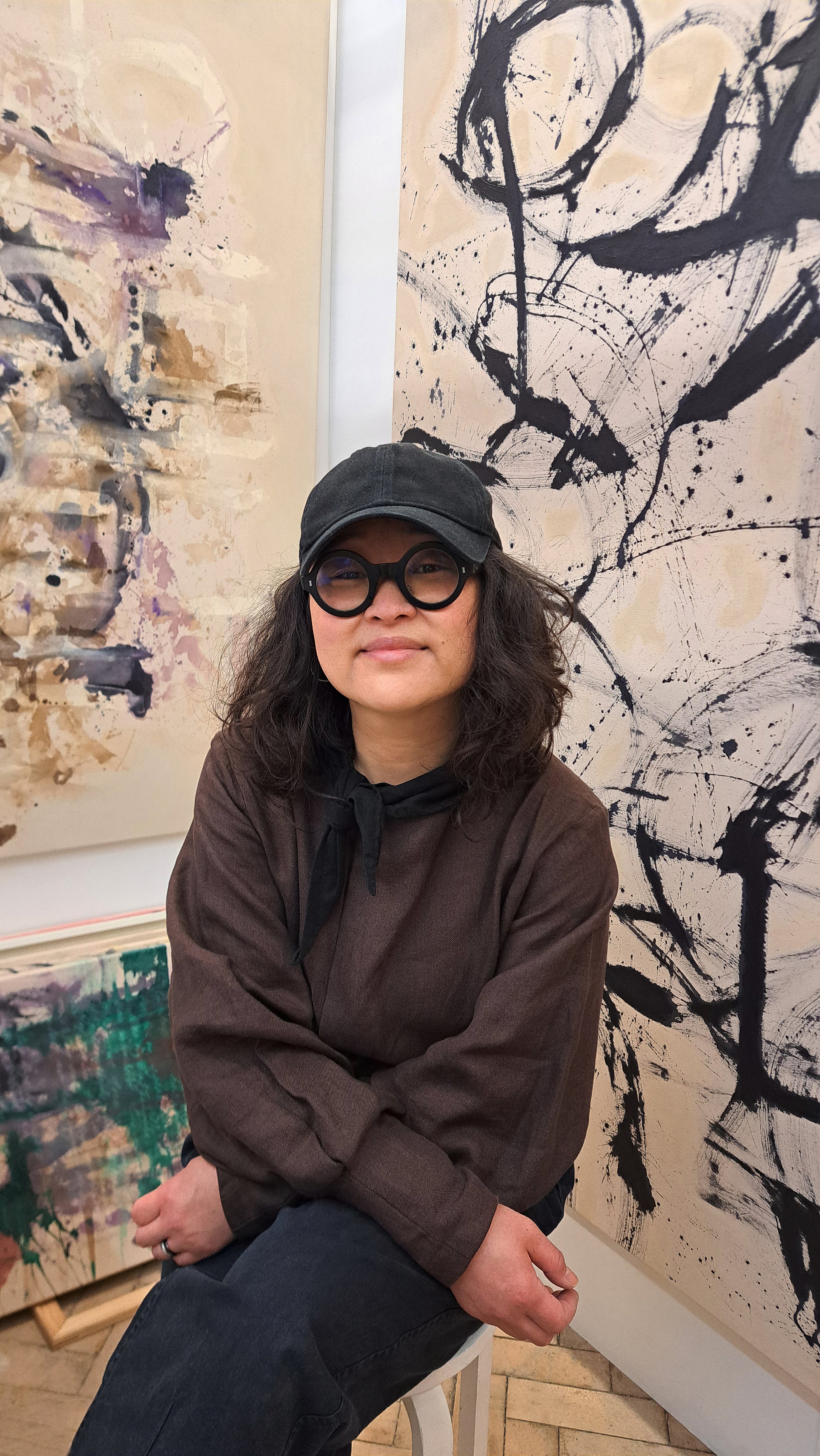
My art practice is a way of making sense of the world. For me, creativity exists in the space between control and chaos, a place where intuition and intention meet. Through making, I am able to access a quieter, unconscious part of my mind. As Georgia O’Keeffe once said, “Through my paintings, I can describe feelings and moods I cannot describe with words.” I return to this sentiment often; it captures something essential about why I work the way I do.
During the pandemic, my practice centred on human connection, the need for community, touch, and closeness in a time of separation. The paintings from this period were structured and deliberate, with a strong, insistent palette. Red appeared frequently, carrying ideas of urgency, intimacy, and the body.
My Innermost series marked a shift inward. These works respond to a growing collective urgency around climate change and the pressure to make better, faster decisions about how we live and how we leave our mark on this planet. The brushstrokes became lighter, the colours more open. Embedded within the work is a sense of restlessness, one I observe in younger generations and among my own contemporaries, as many question purpose, value, and the systems we have inherited. This desire for change is not illustrated directly, but carried through the energy of the paintings themselves.
My work continues to mirror the world as I experience it. As the stories and questions I want to address evolve, so too do my processes and chosen materials. At the heart of my practice is the handmade and the personal. I am drawn to the uniqueness of an individual mark—whether made with a brush on canvas, a pencil on paper, an etching needle on copper, or hands shaping clay or wood. To remain inquisitive, to stay open, feels essential to both my work and my idea of happiness.
My most recent body of work, Conceal or Reveal?, explores identity, motherhood, and fertility through abstraction. The series is informed by my experience of being adopted, by my adoptive mother’s handwritten diaries, and by my own experience of motherhood. These intimate histories are layered into the work rather than narrated, allowing feeling to surface gradually.
Incorporating fragments of my mother’s diaries, the work also reflects on the fragility of language and memory in an increasingly digital world. As handwritten letters, diaries, and notes disappear, I ask what is lost alongside them. Are our stories truly preserved when they exist only as data?
I am happiest when I paint, and my mind is calm. In this way, my art practice is inseparable from my mental health. In a world that often feels overwhelming, I feel fortunate to have found a way of working that grounds me, gives shape to uncertainty, and allows me to keep asking questions.
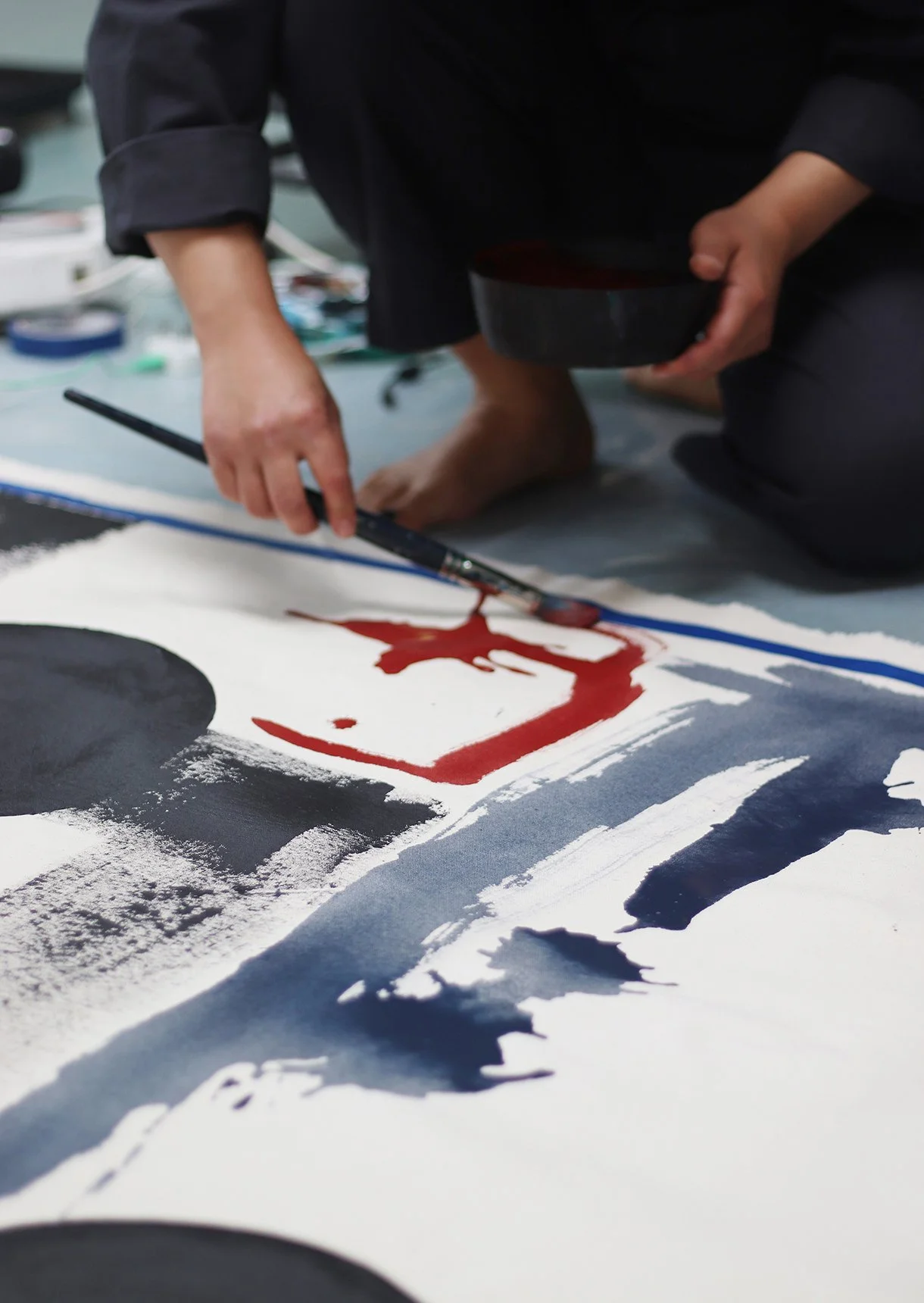
I was born in South Korea and adopted in Norway, where I lived until my early twenties, before settling in London. The city that has been my home for the past fifteen years. My relationship to colour is shaped by this movement across geographies, but I always carry with me the colours of the sky, the shoreline, and the mountains of my childhood. Norway gave me my base palette: blues, browns, and greens, tones I return to again and again.
Alongside this inherited palette, I gather colour stories wherever I go. On my way to the studio, during visits back to Norway, and while travelling, I collect fragments, fleeting combinations of colour, often captured as photographs. These moments act as catalysts, feeding into the more expansive colour work that unfolds in the studio.
I am drawn to experimentation, and to the idea that no two people share the same relationship to colour. Our preferences are shaped by who we are, where we have been, and what we have lived through. For me, colour becomes a quiet form of autobiography, layered, intuitive, and continually evolving.
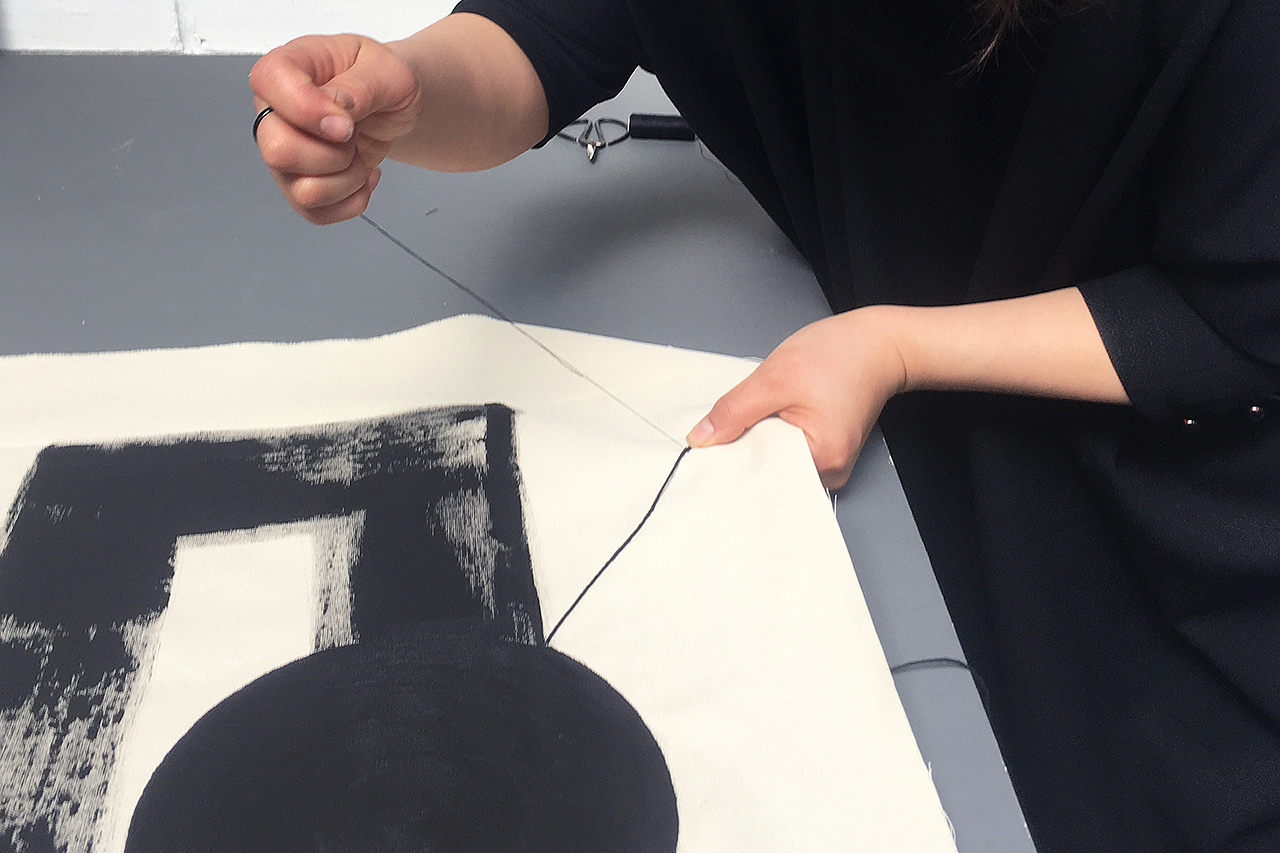
In my practice, I stitch into both paper and canvas. The act is at once therapeutic and frightening—each stitch a permanent incision into the surface. Yet it is this risk that draws me in. Stitching introduces a physicality, a quiet violence softened by care.
The thread pulls the work into three dimensions, giving it body, weight, and presence. Through this process, the surface begins to feel alive, as though it has found its final form.
I remain committed to following how my visual language shifts and deepens over time, allowing materials, gestures, and instincts to guide the evolution of the work.
LINE
I found my line in my late twenties, and it was broken. I draw with felt-tip pens and permanent markers that are close to running out, drawn to the raw, scratchy marks they leave behind. There is a vulnerability in this fading line, uneven, hesitant, alive.
I carry this energy across my practice, allowing the broken line to move between drawing, printmaking, and painting. It appears in both colour and monochrome, shifting in tone but retaining its fractured rhythm.
I return to drawing and monochrome work between periods of intense colour, using it as a kind of palate cleanser, a way to reset, to listen, and to let the work breathe.
SELECTED EXHIBITIONS:
2026
Jan. Painting -A Changed Environment. Group show Messums Wiltshire
April. HOLDING BOTH Maria Hating x Paloma Tendero. Duo Show APSARA studio.
2025
Oct. TERRA Burgundy, France
Curated by Jenn Ellis and Emie Diamond
RESIDENCIES:
2024
XENIA RESIDENCY, CREATIVE RETREAT, HAMPSHIRE, UK
2022
Øyna, Norway
In private and corporate collections:
UK
Norway
US
France
Switzerland
SELECTED DESIGN PROJECTS & COLLABORATIONS:
Tate Modern - Commissioned illustrated scarf to mark the opening of the Blavatnik building
Tate Liverpool - Commissioned 30th anniversary scarf
40th Anniversary logo A-N The Artist Information Company

Dancing 2025, acrylic on canvas measuring 160 x 200 cm or 62 x 78 inch